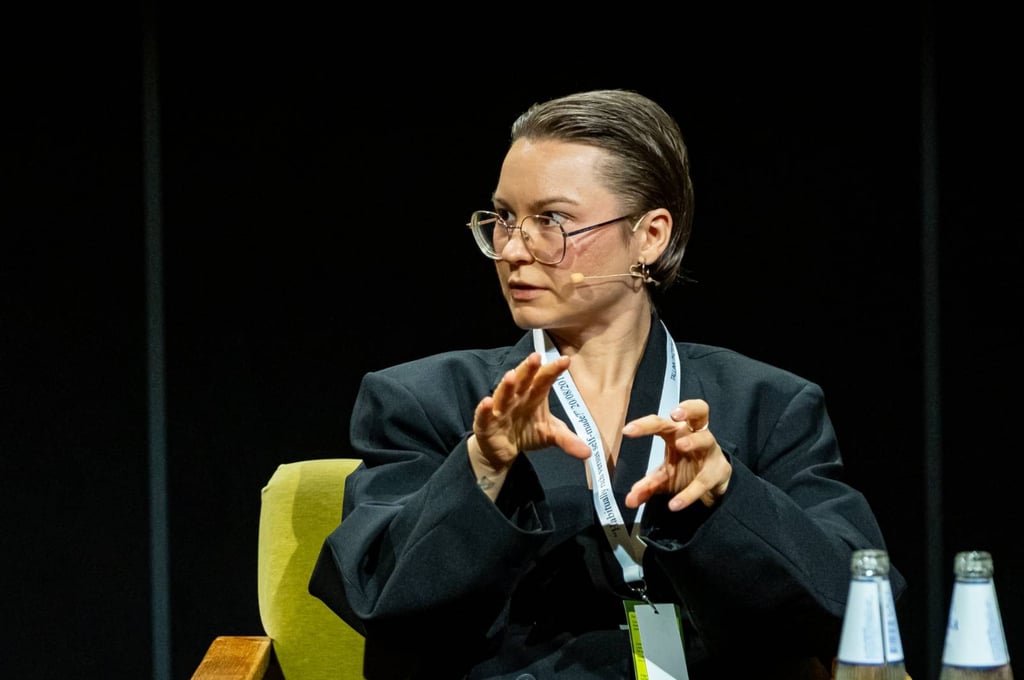
Portraits of Members: Vaida Stepanovaitė, the Chairperson of the Art Workers' Union
"An artist asked me, 'How is it that when I put on an exhibition, everyone gets paid—the curator gets paid, the exhibition space manager gets paid, the cleaner gets paid, the designer gets paid—but I'm the only one who doesn't? This situation is common," says Vaida Stepanovaitė, chair of the Art Workers' Union, talking about the paradoxes of art workers' salaries, fragmentation, and the need for solidarity.
G1PSENGLISH MENO DARBUOTOJŲ
12/2/202511 min read
Rokas Linkevičius (G1PS): Tell us who you are and what you do.
Vaida Stepanovaitė: My name is Vaida, and I have been working in the arts for about 15 years as a curator, researcher, and representative of arts workers' rights. I am nearing the end of my doctoral studies at Goldsmiths University in London – I have finished writing my dissertation, which focuses on the organization of art workers, trade unions, and the context and cultural field of Eastern Europe and the Baltic states. I am now waiting for my defense. I have established and managed various galleries and organizations. That is why I am interested in working with the representation of art workers, because I have truly experienced the art field from all possible angles: I have drafted communication plans, produced social media posts, planned the organization's annual budget, sought and found funding, prepared texts, worked as a magazine editor, and lectured. I care about how art workers feel, not just artists or curators, but all the people who work really hard in the art field. I care about representing them and being part of the community.
R: The figure of the art worker in the public sphere is quite mystified, difficult to define. What does a day in the life of an art worker look like?
V: First of all, it would be quite helpful to understand who art workers actually are. In the cultural field and public discourse, we hear a lot about artists and curators, but little about other participants in the art field. That is why our union is dedicated to art workers, exhibition architects, designers, exhibition supervisors, and technicians. We include everyone working in the field of contemporary visual arts, regardless of their position. This includes those working full-time under a full contract, those working on a freelance basis, and those working under a service contract. In short, we take a very broad view of the definition of art workers. This is not without reason, as we believe that it becomes easier to talk about problems in the field of art, share concerns, and look for solutions if we approach it from a perspective of solidarity. That is why it was important to talk to more than just one person.
Returning to the question of what a day in the life of an art worker looks like, it seems to vary greatly depending on profession, experience, and workload. But in most cases, it probably looks like this: you work part-time on a long-term contract at an institution or budgetary agency, and after work or on weekends, you pursue your creative activities as an artist (and, if you manage to get paid, you pay yourself through individual activity) – and on top of all that, on Friday evening you help a colleague install an exhibition in a gallery. It's a busy day.
R: So you would say that the situation of art workers is uncertain, lacking security and stable remuneration?
V: There have been quite a few studies by the Culture Council in recent years analyzing the socio-economic and creative situation of artists in Lithuania. I recently looked at the figures again, and about 81% of artists said that they had worked without remuneration for some kind of work in recent years. According to the same data, the average artist works 55 hours per week, which is longer than the average, but only a third of that time comes from creative activities directly – another third comes from activities that are partially related to creativity or the field, and the last third is completely unrelated.
Such studies reflect what I myself experience and what my colleagues experience. It is very difficult to talk about one exemplary art worker who can represent all the problems, because there are simply many different economic issues that fall under different categories. For example, it is one thing to represent an art worker who works under an employment contract, and another to represent someone who works on a freelance basis: pensions, taxes, occupational safety, and other things are calculated differently.
People who work on a freelance basis face these problems. This is especially true in my field. For example, you need to earn at least the minimum wage for at least three months in a row to be eligible for full social benefits, including maternity and sick pay and health insurance. In the arts, it is often not stable enough to earn a similar amount every month, to always know where the remuneration will come from, or that it will correspond to the work done. Many creators work intensively on one or, more often, several projects for several months, but they only get paid once the projects are completed. This means that you may not receive any remuneration for two months and only receive it in the third month, and during those months you will not accumulate any social security. Of course, this does not only apply to the field of art, but here this specificity is particularly relevant and acute.
R: Is the lack of remuneration for the work performed a result of workplace abuse, or rather a deeper problem related to the image of art workers in society?
V: I think it comes from both sides. On the one hand, there is a widespread belief in society that artists shut themselves away in their studios, thinking about something, creating nonsense, and contributing nothing to society, yet still wanting something in return – remuneration, social security. Although outdated, this public opinion is still prevalent. Perhaps I would link this to the fact that there are doubts that artists provide any benefit to society at all. On the other hand, although many people think that the cultural sector requires investment but does not provide any economic return, the benefits it creates are actually significant. For example, in Ireland, it has been calculated that every euro invested in culture returns two and a half times to the state budget. Of course, we don't want to get stuck on economic benefits when talking about culture, because it's a complex issue.
The point is that the field of art itself is thankless and not always convenient for the creators. Artists often do not receive remuneration for presenting their works at exhibitions. They are not paid by the institutions themselves, the galleries, or the state. This raises the question: why is the field of art so unpleasant for the creators themselves? It is undervalued; it is believed that artists should just be happy that someone is showing their work, that they are presenting themselves to the public, as if that were enough. Attempts are also being made to solve this problem, especially in various artists' associations. The Lithuanian Artists' Union has a fair remuneration campaign, which seeks to establish that it is not only necessary to pay remuneration, but also to pay it fairly. Often, if we take as a measure the fact that an artist has created and presented a work at an exhibition, even if she is paid, the remuneration will not always correspond to the work done. It may be a work that took six months, a year, or even a couple of months to complete, but there is no corresponding calculation of how many hours of work were put in and what the corresponding remuneration should be.
R: As you said, not limiting ourselves to economic indicators, but also touching on human ones: in the communication of the Art Workers' Union (MDPS), you emphasize the fatigue that has taken hold in the art field. How does this constant uncertainty and project-based work affect emotional health in general? How do you cope with exhaustion?
V: We really emphasize fatigue, uncertainty, and confusion between roles—it seems like you want to create, but you also have to be your own lawyer, accountant, and whatever else you want to be. During the Kaunas Biennial, we prepared a map at the Kaunas Artists' House where art workers can see how uncertain their working conditions are. Questions such as “Do you know how much you will earn next month?” “Will you be able to pay your rent?” “Do you work under a contract?” Unfortunately, these questions are currently relevant to almost every art worker. This is an attempt to bring art workers closer to the wider society, for whom all of this also applies.
Over many years of work, I have often been severely overworked and faced health problems, primarily because there is enormous strain and the income does not match the work put in. In many cases, we do this to ourselves because we want to put in as much work as possible and also build a community, share ideas with people, but we are not paid for this, or we are paid too little. Even MDPS is an activity that I do because I believe in it, and Agne Bagdžiūnaitė and I do it voluntarily. We put as much strength and energy into the daily development of the union as we can. We spread the message that we need to think about fair pay, but we don't always apply this to ourselves.
R: Now I would like to move on to the trade union itself. What was the turning point that prompted you to come together?
V: We created the trade union in two stages. The first was in 2021, during the pandemic. At that time, everything had come to a standstill and there was a lot of uncertainty, both economically and socially. This was especially true in the cultural field – many projects had to be put on hold because it was impossible to participate in public gatherings. The cultural field relies on exhibitions, concerts, performances, book presentations, workshops, and other educational activities. The entire field of art is based on publicity and promotion. When access to public spaces was suspended during the pandemic and galleries and museums were closed, the uncertainty for cultural creators became very apparent. If a gallery has to be closed due to government regulations, the creator will not be able to complete the project and will not receive any remuneration. Such cases, where creators' income stops, have made it very clear how little security and financial cushion we have, how little community support there is. Instead, we are encouraged to be "enterprising" and to solve all these issues with individual solutions. Many barely make ends meet, earning minimum or below-average wages for their work, despite having higher education and many years of experience. In other sectors, income would certainly be higher under such conditions. Although there are many long-standing associations and structures of art creators seeking to improve the creative conditions of artists' work or to create a community, at that time it seemed that there was a lack of organizations representing not only artists, but also a broader field – art workers. There was also a lack of organizations that would represent them not only in terms of publicizing their work, but also legally. That's how the idea came about at the time. A lot of work was done observing and refining so that we could think about a professional union.
Then, in 2023, cultural journalist Dovydas Kiauleikis wrote an article about how there are mostly women in the cultural field and that men could negotiate better pay in their place. It was a provocation that sparked a lot of discussion. At that time, my colleagues Agnė Jokšė and Agnė Bagdžiūnaitė revived the idea of a trade union and encouraged us to get together and form something official. The problems mentioned above were certainly not getting any better, so we made a decision. The Art Workers' Trade Union was then established as a branch of the May 1st Trade Union (G1PS). This was the foundation that clearly defined our direction—that we are part of a broader trade union, that we stand alongside workers from other professions in Lithuania, that we talk about labor issues, that we ourselves act as a trade union. It was useful for us to take on board the union's experience, to understand how to organize as workers who do not have one specific bad employer, in a broader context of solidarity, and also to legitimize ourselves from an administrative point of view.
R: Since you mentioned solidarity, how do art workers manage to show solidarity? At least from the outside, it seems that the art field is quite fragmented, but at the same time it encourages this fragmentation, as it places a strong emphasis on the names of creators – they often attract visitors to exhibitions and events. How can this be reconciled?
V: It's a long process. Of course, at MDPS we believe in the need for solidarity between different professions in the art field – artists and curators shouldn't be the only key players. Although in practice this is difficult to achieve. If you tell artists that we represent not only them and their working relationships, but also include other art workers on an equal footing, they often get angry. An artist asked me, "How is it that when I do an exhibition, everyone gets paid—the curator gets paid, the exhibition space manager gets paid, the cleaner gets paid, the designer gets paid—but I'm the only one who doesn't?" This situation is common. Even if the artist has the biggest name, the greatest symbolic capital, she is the only one who does not receive remuneration. It's a paradox. That is why we need to think about solidarity among the employees who all work on that exhibition, because if everyone shared their working conditions, salaries, working hours, and understood the conditions under which they work, it would be much easier to negotiate and demand fair compensation. At least sharing and realizing that we all have problems, fatigue, and shortages provides emotional support and leads to problem solving.
R: What have you achieved with the MDPS collective so far?
V: If we're talking about very tangible things, one of our most recent broader activities was organizing a meeting of artists and art workers from the Nordic and Baltic countries. We brought together thirteen organizations from seven countries in Vilnius, all of which work on various aspects of the issue of poverty among art workers. It was interesting to share experiences and understand how to represent art workers more effectively. This project is part of our attempt to spread the word about MDPS and the situation in the Lithuanian art field on a broader scale, to seek solidarity, and to encourage networking. We have also contributed to public policy: we have met with political parties, consulted on and commented on their cultural strategies, and advised on the drafting of laws related to the working conditions of cultural workers. With the help of G1PS, we have helped our members resolve labor disputes. That's how broad our activities are.
R: Do you have any specific plans for the future? What are your priorities?
V: We definitely plan to continue networking, exchanging experiences and knowledge. We also cooperate and will continue to cooperate with Lithuanian artists' unions. Of course, we would like to increase membership and internal member initiatives, because often there is no time for that with various projects. We want to get more involved and organize various activities, so I think we will develop that starting next year.
R: Finally, what long-term changes would you see as necessary for the situation of art workers to change not just cosmetically, but fundamentally?
V: Although it seems like a fairly concrete and self-evident path, it is absolutely necessary to ensure fair remuneration for female artists, employees, and non-artists. This is not just a slogan, but a change that should take place across the board – through the state apparatus, the Ministry of Culture, support for cultural institutions and independent creators. The state should ensure that artists are paid no less than the remuneration agreed collectively with the Lithuanian Artists' Unions. Then the state dimension, the cultural institutions dimension, and the dimension of organizations representing art workers will all come into play. It seems like a very simple and practical thing – let's pay remuneration – but it is a contractual strategy and effort.
In general, I would say that the cultural field is dependent on state funding. We in the trade union believe that state funding is a fundamental part of promoting culture. We should not follow the models we see in other countries, where the entrepreneurship of creators and organizations is encouraged, so that creators themselves generate income from commercial and other activities. We do not want to go down that path. Of course, it is necessary to diversify that income, or to consider not only state support, because it will never be enough for everyone. Also, so that we are not completely dependent on state funding for the structure – this funding is provided on a project basis – so it is short-term, uncertain, and it is very difficult to provide a sustainable environment for creators and to ensure fair remuneration for the creators themselves through short-term projects. On the one hand, this funding is good, but at the same time it raises many problems that contribute to scarcity. One of the strategic steps would be to think about structural long-term funding or support structures. For example, ensuring studios and infrastructure for artists to create. One could also consider a universal basic income for artists – Ireland is currently trying this and it is showing very good results – so it could be considered as one of the ways of providing structural support in the future.
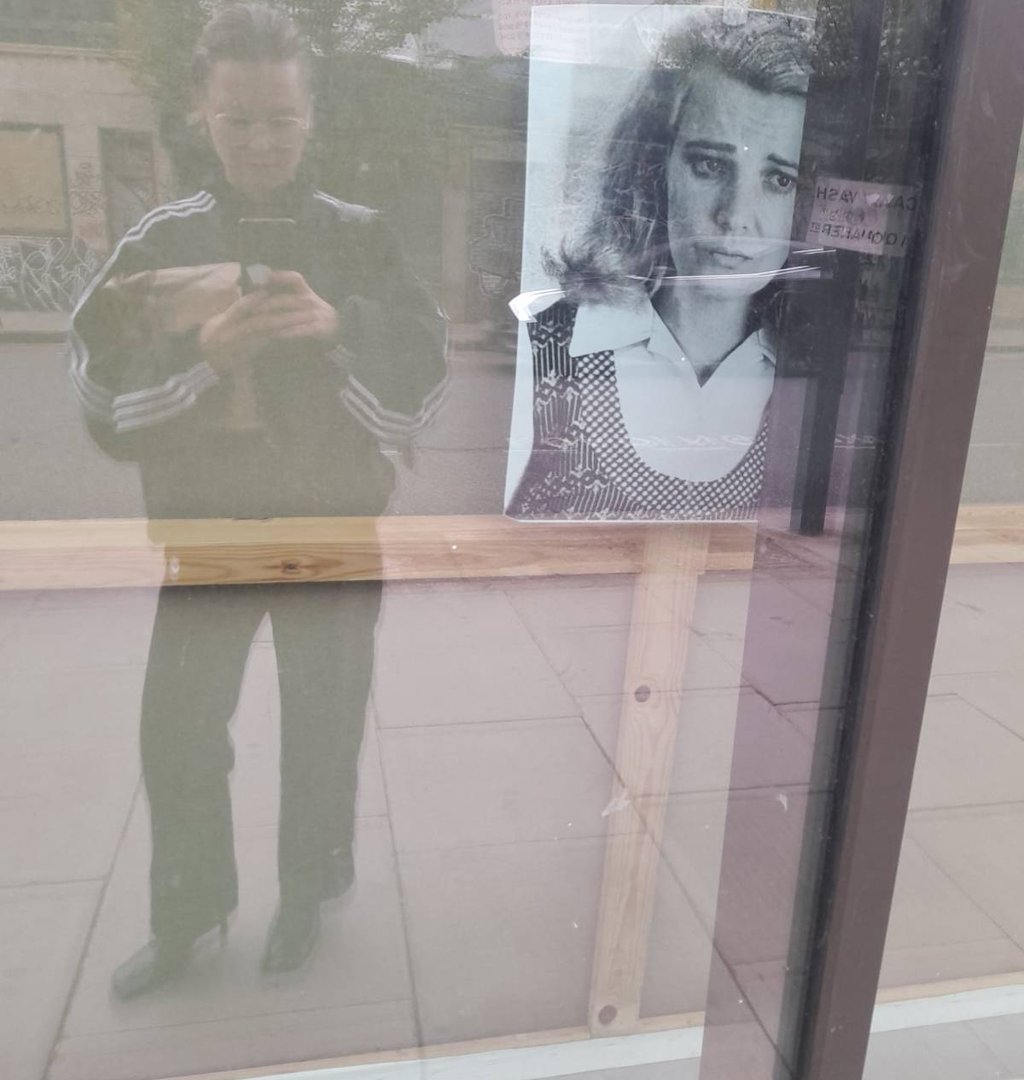
Picture by Aron Urb
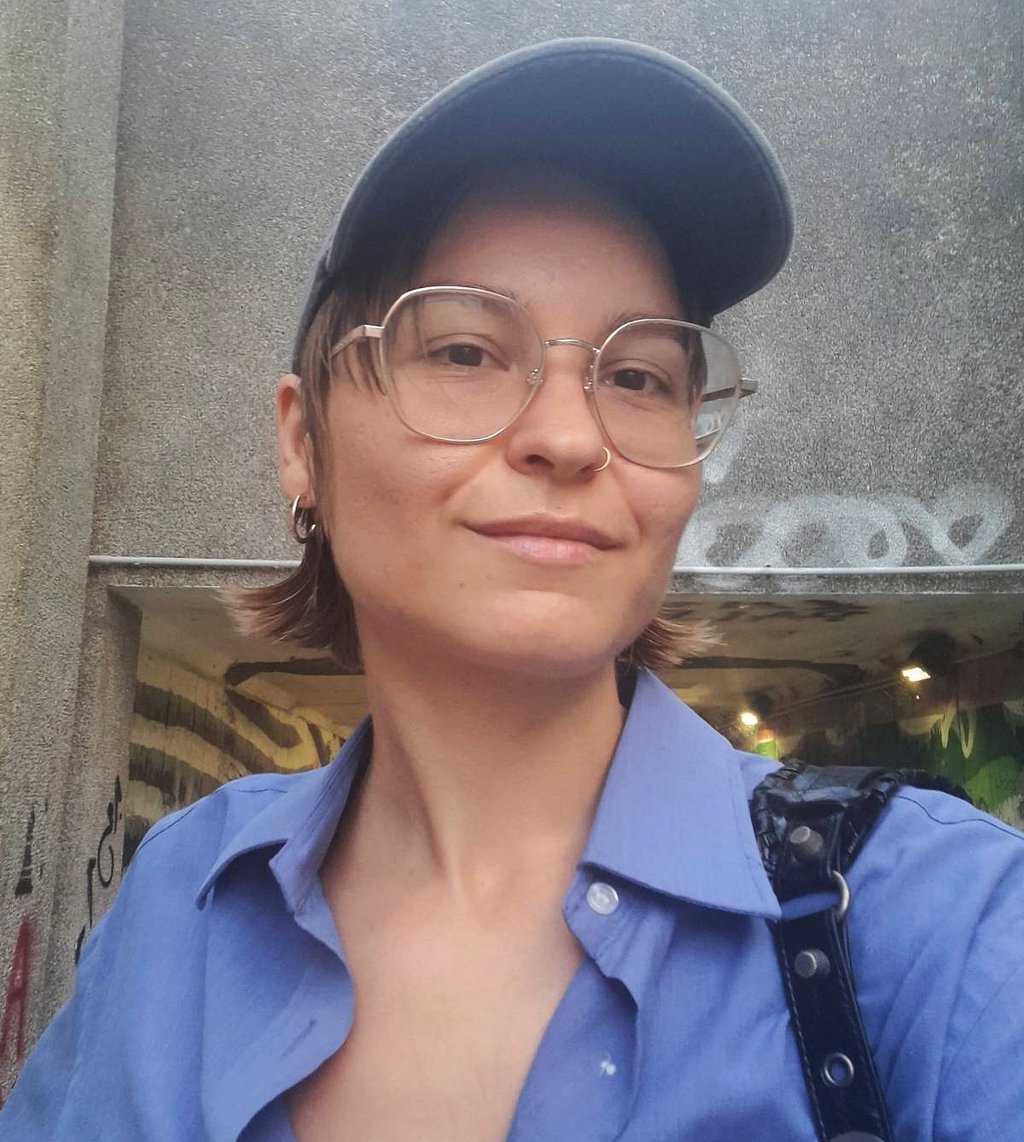
From the personal archive of V. Stepanovaitė
From the personal archive of V. Stepanovaitė